



SCMS Hyderabad Logo | BBA College SCMS Hyderabad Logo | BBA College
Symbiosis Centre for Management Studies Hyderabad Logo
Visit SIU Website Symbiosis Merchandise Store Symbiosis Uniform Portal Museums
Group 557

MOCK

PARLIAMENT

Summary

Event Name: MOCK PARLIAMENT

Objective:

  1. To simulate the functioning of the Indian Parliament and understand its procedures.
  2. To enhance students’ knowledge of parliamentary democracy and legislative processes.
  3. To develop skills such as public speaking, critical thinking, debating, and teamwork.
  4. To provide a platform for students to express their views on national issues and propose constructive solutions.

Outcome:

  1. Students developed a practical understanding of how the Indian Parliament functions, including the process of introducing, debating, and passing bills.
  2. Participants gained confidence in expressing their viewpoints clearly and convincingly in a formal setting.
  3. Students worked collaboratively in party groups and committees, enhancing leadership, coordination, and negotiation skills.
  4. Engagement with real-life political and social issues led to greater awareness of current affairs and governance challenges.
  5. Participants understood the significance and responsibilities of different roles such as Speaker, Prime Minister, Opposition Leader, Ministers, and Press members.
  6. Debating controversial topics helped students learn how to analyze issues, consider multiple perspectives, and propose balanced solutions.
  7. Members of the Press Committee learned how to cover political events impartially, write reports, and present balanced news summaries.
  8. The simulation encouraged active citizenship, motivating students to participate in democratic processes and contribute to societal improvement.

BRIEF REPORT:
As part of the academic curriculum for the subject Public Policy and Governance, a Mock Parliament was conducted. The students took on roles of the ministries such as Ministry of Home Affairs, Ministry of Finance, Ministry of Defence, etc. Students were also appointed as Media Personnel and Secretary General. Students were assigned for the roles of Prime Minister and the Speaker each, who facilitated the overall discussion of the Mock Parliament.
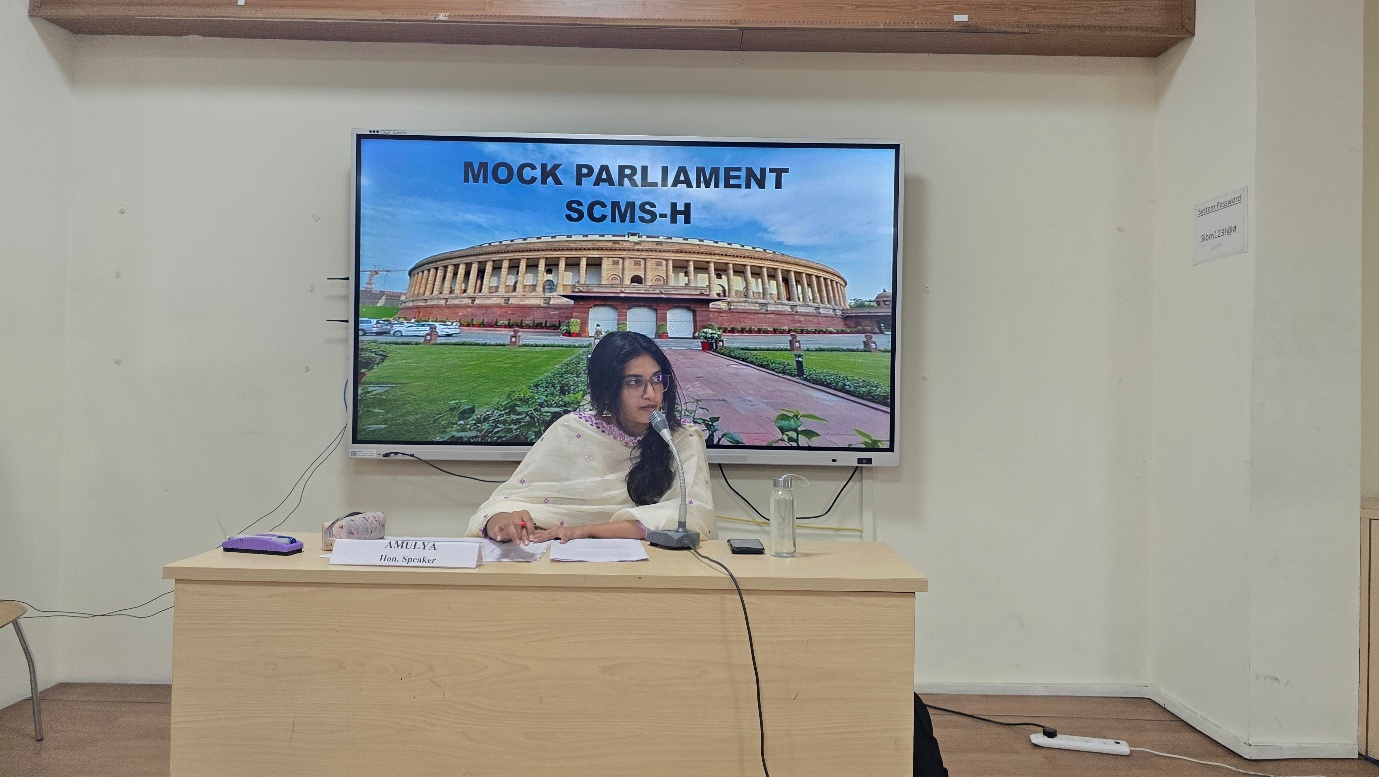
Guest Lecture Image 1

(Speaker of the House (Amulya) initiating the Mock Parliament)

The event began with a formal address by the Speaker of the House, who laid down the rules and maintained order throughout the session. The Mock Parliament proceeded with the speech of the prime minister which gave a stage for debates among the Ruling Party and the Opposition Party. The Ruling Party consisted of the following ministries; Ministry of Home Affairs. Ministry of Finance, Ministry of Defence, Ministry of External Affairs, Ministry of Education, Ministry of Health and Family Welfare, Ministry of Environment, Forest and Climate Change, Ministry of Agriculture & Farmers' Welfare, Ministry of Labour and Employment, Ministry of Railways, Ministry of Women and Child Development, Ministry of Tribal Affairs, Ministry of Information and Broadcasting. Bills were introduced and debated upon, with strong arguments from both the Ruling Party and the opposition.
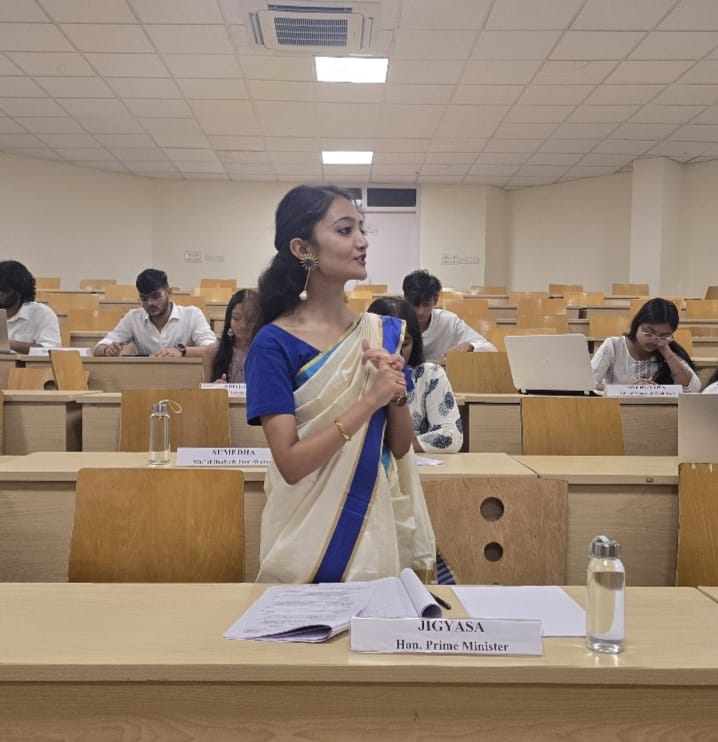
Guest Lecture Image 1

(Honourable Prime Minister (Jigyasa) facilitating the discussion)

The highlight of the session was the intense and thought-provoking debate between the Ruling and Opposition Parties. A bill of national relevance was introduced by a member of the Ruling Party, after which a detailed discussion unfolded. The Ruling Party defended the bill with strong arguments, citing statistics, case studies, and policy references. They emphasized the long-term benefits of the bill and its alignment with national interests, while the Opposition Party were critical in their opinions of the bills and expressed their opinions accordingly.
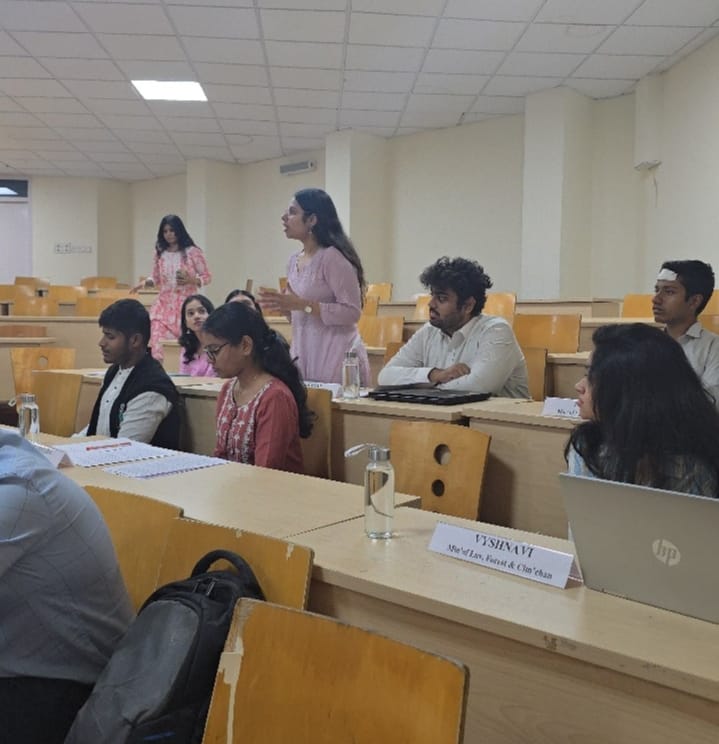
Guest Lecture Image 3

(Member of the Ruling Party (Anjali) presenting their points)
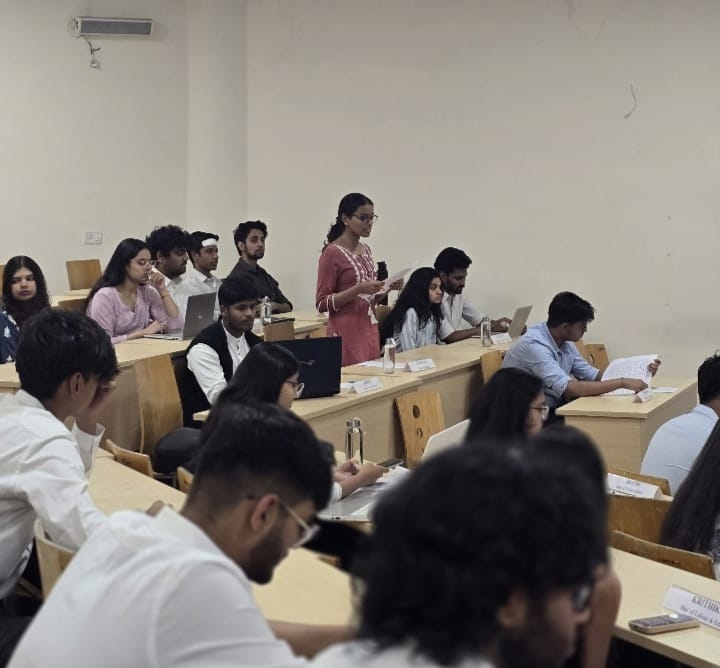
Guest Lecture Image 3

(Ministry of Defence (Samhita) discussing the bills passed)

Both the Ruling and Opposition Parties presented their arguments with clarity, depth, and a strong understanding of the issue at hand. Members actively questioned each other’s standpoints, drawing attention to potential strengths and flaws in the proposed bill.

Guest Lecture Image 3

(Member of the Opposition Party (Shreyas) discussing)
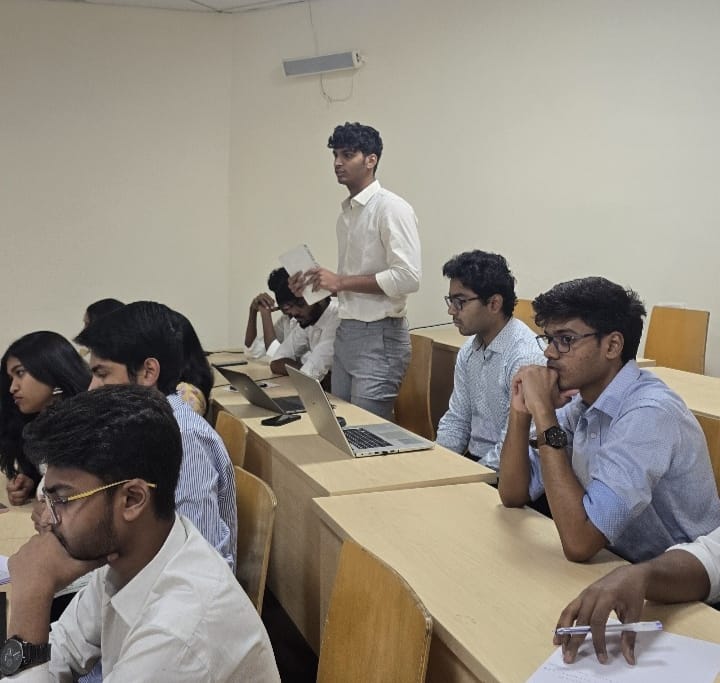
Guest Lecture Image 3

(Member of Opposition Party (Sougandh) sharing insights)

The Secretary Generals played a crucial role by recording the minutes of the meeting, ensuring accurate documentation of the proceedings and keeping note of every debate. The Media Committee closely monitored the proceedings and prepared reports and press releases on the session. The Secretary General's note-taking ensured transparency and accuracy in documenting the legislative process. This record served as a valuable reference for evaluating the outcomes of the session. Towards the end of the session, media personnel from the Press Committee were given the floor to ask questions to various party representatives.
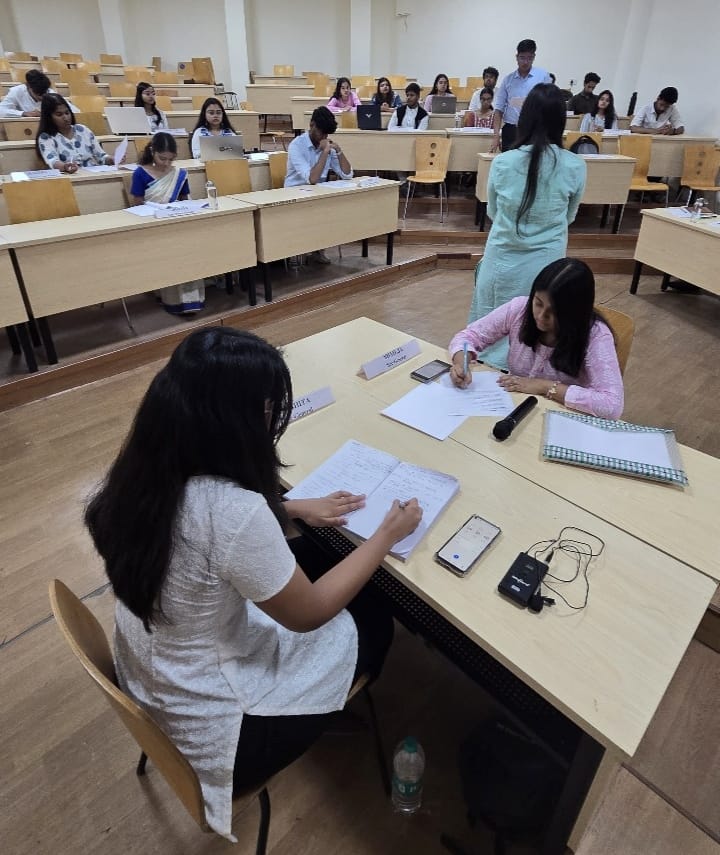
Guest Lecture Image 3

(Secretary Generals (Yoshitha and Shailja) noting down minutes of the meeting)
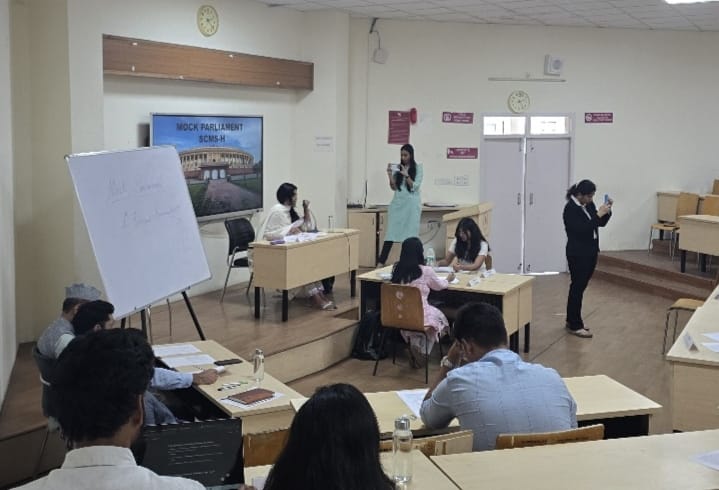
Guest Lecture Image 3

(Media Personnel (Nida & Apeksha) capturing the event)

The session ended with the students standing up for the national anthem.
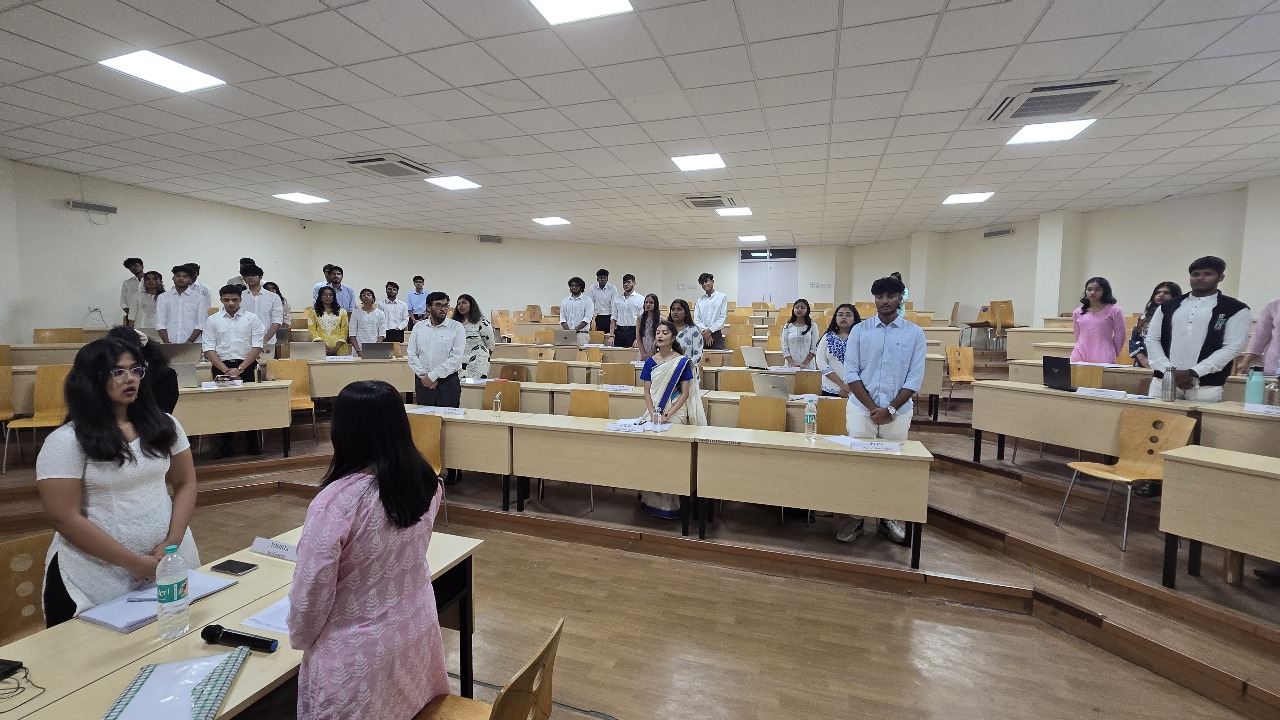
Guest Lecture Image 3

(All members of the assembly standing up for the national anthem)

Conclusion

  1. Students gained hands-on knowledge of how democratic institutions operate and how laws are formulated, debated, and passed.
  2. The event fostered a sense of responsibility and interest in public affairs, encouraging students to be more involved citizens.
  3. Participants significantly improved their public speaking, listening, debating, and persuasive communication skills.
  4. Engaging in structured debates helped students appreciate differing viewpoints and the importance of dialogue in resolving disagreements.
  5. By stepping into various parliamentary roles, students experienced the responsibilities and challenges faced by public representatives and media professionals.
  6. The session strengthened cooperation and planning within party teams, promoting leadership, strategic thinking, and group coordination.
  7. Inclusion of roles like the Secretary General and Press Committee added authenticity, bridging theory with real-world parliamentary practice.
  8. The simulation inspired several participants to consider careers in public service, politics, journalism, and law.

Overall, the session was dynamic, intellectually stimulating, and offered a rich learning experience. It brought theoretical knowledge to life and gave every participant a chance to explore the essence of democratic governance.
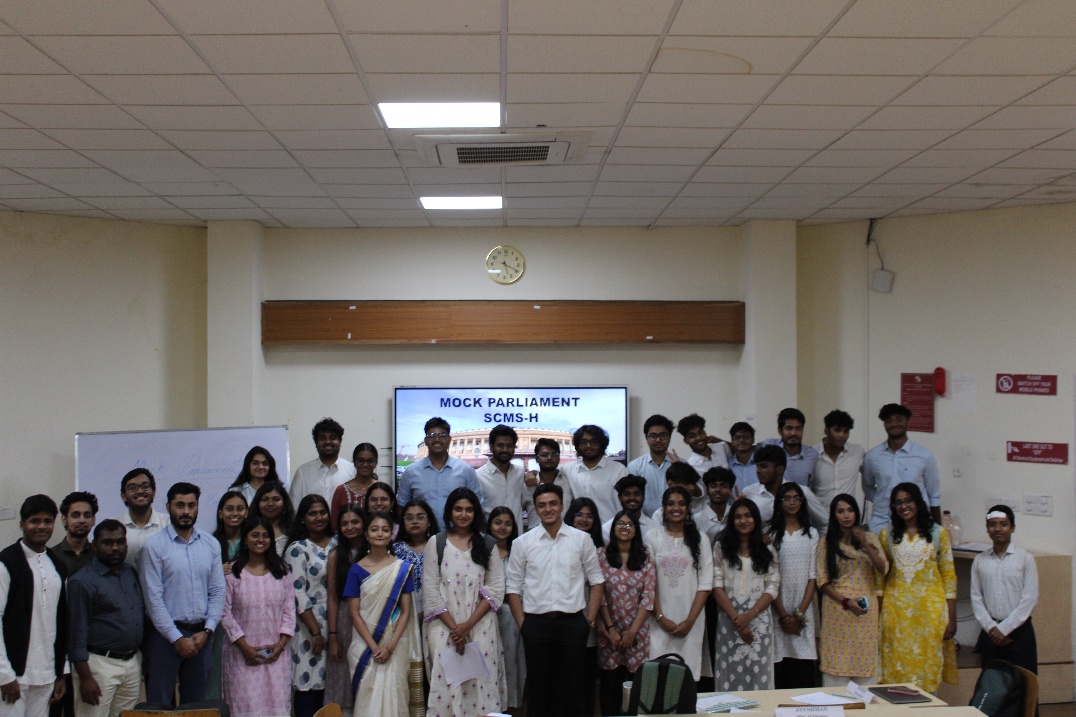
Guest Lecture Image 3

(BBA batch (2022-2025) along with the faculty concluding the Mock Parliament)

© 2022 SCMS Hyderabad. All Rights Reserved.

Designed & Developed by SRV Media

Caution Notice

Admission to all the courses and programmes at Symbiosis International (Deemed University) (SIU) are strictly on merit, based on the  eligibility criteria, admission criteria and processes prescribed by the University from time to time and assessment of individual performance in different entrance tests / procedures conducted by SIU including Symbiosis National Aptitude Test [SNAP], Symbiosis Entrance Test [SET], Symbiosis Law Admission Test [SLAT], Symbiosis All India Admission Test [AIAT], Symbiosis Entrance Exam for Design [SEED], Symbiosis Institute of Technology Engineering Entrance Exam [SITEEE] and Symbiosis Ph.D. Entrance Test (PET).

It is a matter of Policy that Symbiosis International (Deemed University) does not charge capitation fee for admission from students  and this is widely and prominently published as well on all the relevant places like prospectus, website, Admission Booklets, etc.

All aspirants / parents are hereby notified that some individuals and/or organisations are giving / making false and misleading advertisements / claims in newspapers, websites, social media platforms or other means that they can secure/ ensure admission to various programme offered by Symbiosis International (Deemed University). Such individuals or organisations may also seek or demand money from aspirants or their parents in consideration of such purported assurances.

Aspirants and parents are advised to rely only on information and communications issued through the University's official channels, and to independently verify any claim regarding admission made by any third party.

It is informed at large that the University has not authorised or appointed any individual, agent, consultant or organisation to guarantee, assure or otherwise represent that admission to any course or programme, can be secured against payment of money or through any means other than the prescribed admission process. In this regard, Symbiosis International (Deemed University) requests the aspirants / parents to refrain from entering into any transaction with such elements. Despite this Notice, if any aspirant / parent still proceeds with or enters into transaction with such elements, they would be doing so at their own risk and cost.

Symbiosis International (Deemed University) further notifies that any aspirant attempting to approach Symbiosis International (Deemed University) for admission through or at the instances of such agents will be permanently debarred from admission to all the courses and programmes at Symbiosis International (Deemed University).

By order

Registrar